Rising Tension in New England: Questions Surround Leadership Dynamics Within the Patriots Organization
The New England Patriots are once again at the center of attention, not for their performance on the field, but for growing questions surrounding leadership dynamics behind the scenes. Reports circulating within league circles suggest that tensions may be building between head coach Mike Vrabel and team owner Robert Kraft, sparking widespread चर्चा and speculation about the future direction of one of the NFL’s most storied franchises.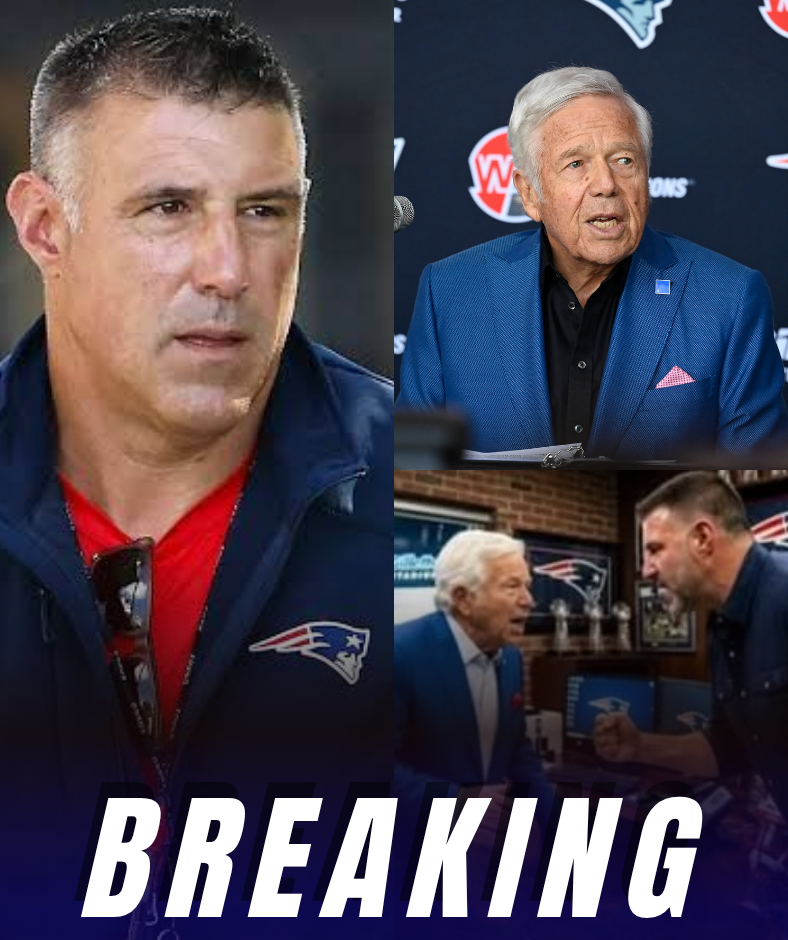
While no official statements have confirmed a direct confrontation, multiple insiders have pointed to signs of internal friction. These reports describe differences in expectations, communication styles, and long-term vision for the team. In a league where alignment between ownership and coaching staff is critical, even the perception of discord can create ripple effects throughout an organization.
For the Patriots, stability has long been a defining characteristic.
For decades, the franchise has been associated with structure, discipline, and a clear hierarchy. That reputation has been a cornerstone of their success, helping them navigate both winning seasons and transitional periods. Any suggestion of instability, therefore, carries significant weight—not only within the organization but also across the league.
At the heart of the situation is the evolving role of leadership in modern football.
Coaches today are expected to manage far more than game plans. They oversee player development, handle media responsibilities, and contribute to broader organizational decisions. Owners, meanwhile, balance financial oversight with strategic input, often shaping the long-term vision of the franchise. When these roles intersect without clear alignment, tension can emerge.
Observers note that this situation reflects a broader trend across the NFL.
As the league becomes more competitive and complex, the margin for error continues to shrink. Teams are constantly seeking ways to gain an edge, whether through analytics, player acquisitions, or coaching strategies. In such an environment, even small disagreements can become magnified.
The response from fans has been immediate and varied.
Some supporters remain confident that the organization will resolve any internal issues, pointing to its history of overcoming challenges. Others, however, see the reports as a potential sign of deeper problems, raising concerns about how leadership dynamics might impact performance on the field.
Within the locker room, the focus is likely to remain on preparation and execution.
Players are accustomed to external noise and understand the importance of maintaining concentration. However, leadership dynamics can influence team culture, shaping how players respond to adversity and how they perceive the organization’s direction.
For Vrabel, the situation represents a test of leadership.
As a head coach, his role includes maintaining cohesion, managing expectations, and ensuring that the team remains focused. Navigating reported tensions—whether confirmed or not—requires a steady approach and clear communication.
For Kraft, the challenge lies in balancing involvement with trust.
Owners play a crucial role in setting the tone for an organization, but effective leadership often involves empowering those in operational roles. Striking that balance is essential for long-term success.
Across the NFL, executives and analysts are watching closely.
Situations like this can influence not only internal operations but also external perception. Free agents, for example, often consider organizational stability when making decisions. A team viewed as unified may have an advantage over one perceived as uncertain.
Despite the speculation, it is important to recognize that much of the information remains unconfirmed.
In today’s media landscape, stories can develop rapidly, sometimes outpacing verified details. As a result, distinguishing between confirmed facts and ongoing reports becomes essential.
Looking ahead, the key factor will be how the organization responds.
Clear communication, both internally and externally, can help address concerns and reinforce stability. Whether through official statements or consistent performance, the Patriots have the opportunity to shape the narrative moving forward.
Ultimately, this situation underscores the complexity of leadership in professional sports.
Success is not determined solely by talent on the field. It is also shaped by relationships, communication, and alignment at every level of the organization.
For the Patriots, the coming weeks may prove significant.
Not just in terms of results, but in how the team navigates the challenges that come with heightened scrutiny. As always in the NFL, the story is still unfolding—and the outcome will depend on how those at the top choose to lead.